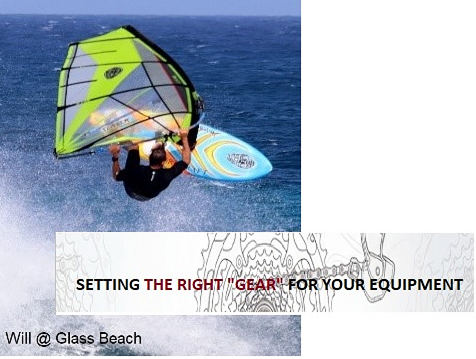
If you want to reduce strain on your your joints and keep sailing with increasing age, sailing with optimally tailored equipment will make the difference. Let`s have a look on setting the right “gear”.
As windsurfers, we can’t shift gears on the fly, like drivers or cyclists. Instead, we have to “pre-set” our gear on the beach before heading out.
Understanding how your sail, board, and fin setups work together changes everything. For instance, you can rig a smaller sail full (baggy) or a larger sail flat to generate a similar amount of initial power. But what is the practical difference, and which setup is right for you?
An easy way to visualize this is a 5-speed bicycle:
1st Gear (Easy Start): Effortless to pedal, but top speed is low. It excels uphill or against strong resistance. In windsurfing: A smaller sail with far less leverage rigged full.
5th Gear (High Speed): Requires massive physical effort to start moving, but once you gain momentum, your top speed potential is high. In windsurfing: A larger sail with a lot of leverage rigged flat.
THE 5 WINDSURFING GEARS (with Witchcraft Sails and Boards matching examples) – using the analogy of bicycle gears to optimize your rig
Gear 1: The Entry Level
|
Setup: Small sail, rigged very full (baggy). Characteristics: Keeps top speed low (below the planing threshold). Perfect for beginners uphauling. The stable center of effort and full profile make sheeting in predictable and forgiving without sudden pull. Board & Strap Setup: Requires beginner-specific shapes or boards offering inboard footstrap options. Recommended Witchcraft Setup: Karma or Slayer sails, or battenless soft sails.
|
|
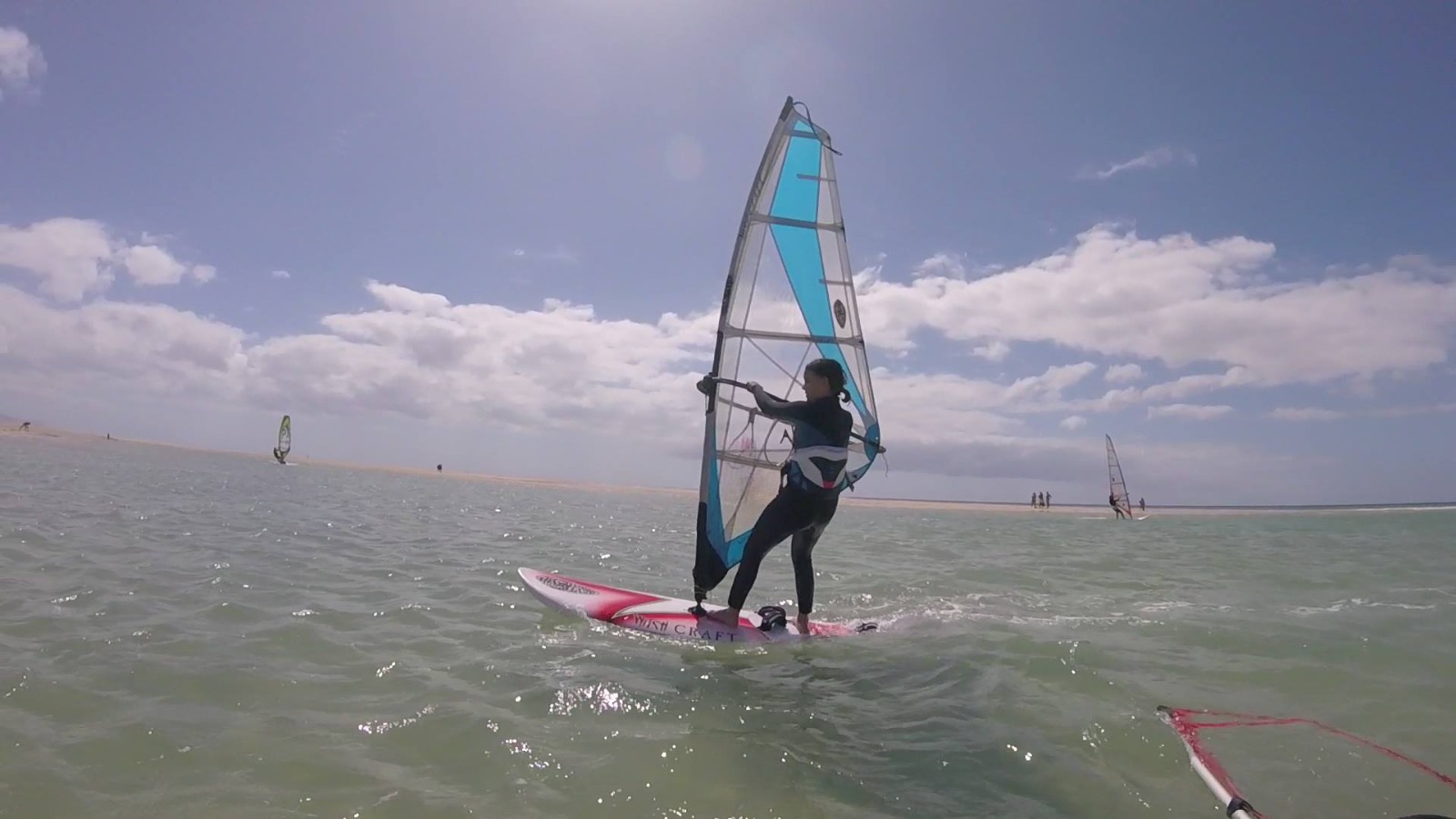

Gear 2: The Comfort Cruiser
|
Setup: Small sail rigged full, but with slightly more downhaul for a touch of loose leech. Characteristics: Early planing at lower speeds. Ideal for intermediates learning waterstarts, straps, and power jibes—or older windsurfers avoiding harsh chop impacts. Slower speeds keep everything soft and forgiving. Board & Fin Setup: Needs an early-planing hull paired with thicker-profiled fins to maintain upwind drive at low speeds. Recommended Witchcraft Setup: A larger Chakra (straps inboard) with larger side fins and a moderate center fin. Sail: Karma (for maximum profile stability). he Mainstream option: Early planing Freeride boards with inboard/forward strap option. Traditional high-speed freeride boards feature locked, outboard straps requiring high sail power and fin drive. Without this constant drive, an outboard setup tilts windward, forcing an awkward stance as soon as you sheet out. |
 |
Gear 3: The All-Rounder (Bump & Jump / Intermediate Wave)
|
Setup: Medium-size sail, rigged medium-full with moderate loose leach. Characteristics: Balanced performance. Fast enough for controlled jumps and soft landings, carving small waves, and easy maneuvering without high physical strain. Recommended Witchcraft Setup: Chakra, Shaman, Haka, or a larger Reaper with thicker-profiled fins. Sail: Karma (B&J, onshore/heavier riders) or Slayer (sideshore/lighter riders). Freeride boards with medium inboard strap positions and a thicker not too big fin can also work for flat water. |
 |

Gear 4: The Action Wave Setup
|
Setup: Larger sail rigged fairly flat with well visible loose leech. Characteristics: Designed for skilled, fit wave sailors. Built for high jumps, loops, aggressive lip hits, and big sprays. Note: Also works well for recreational sailors in easy, flat-water freeride conditions with minimal chop. Recommended Witchcraft Setup: Serum, Haka, Wave V5/V6 (side/offshore), or Reaper (onshore). Sail: Karma (onshore/heavier riders) or Slayer (sideshore/lighter riders).
|
|


Gear 5: The Pro Level
|
Setup: Large sail down hauled flat with high skin tension and massive loose leech to spill gusts. Characteristics: Maximum speed and control when overpowered. Pros accept the higher physical effort of larger sail leverage to achieve maximum speed. Recommended Witchcraft Setup: Serum, Wave V5/V6, or Reaper. Fin Choice: Thinner fin profiles can be used here if the rider explicitly wants the tail to slide out easily in turns, as pros can easily control the drift. Sail: Karma (onshore/heavier riders) or Slayer (sideshore/lighter riders).
|
|

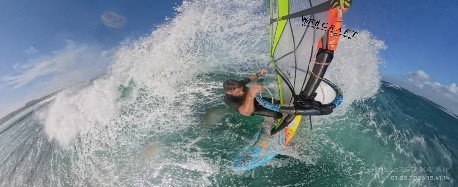

CHOOSING YOUR SAIL DESIGN – PRECISION PRE-SHAPE VS. FLAT-CUT
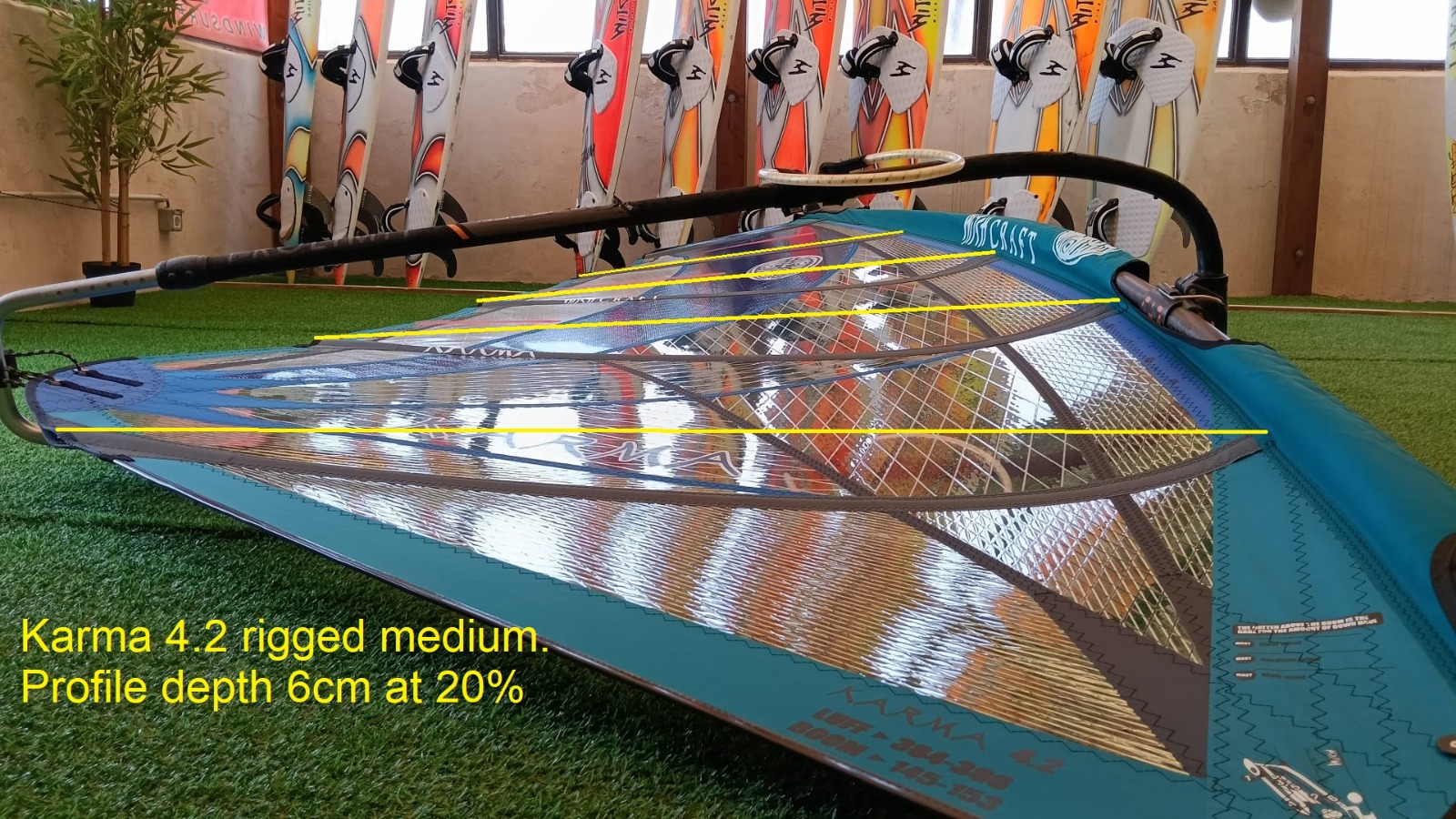
When looking at a sail lying rigged on the beach, you will notice two distinct design approaches across the industry with not much in between:

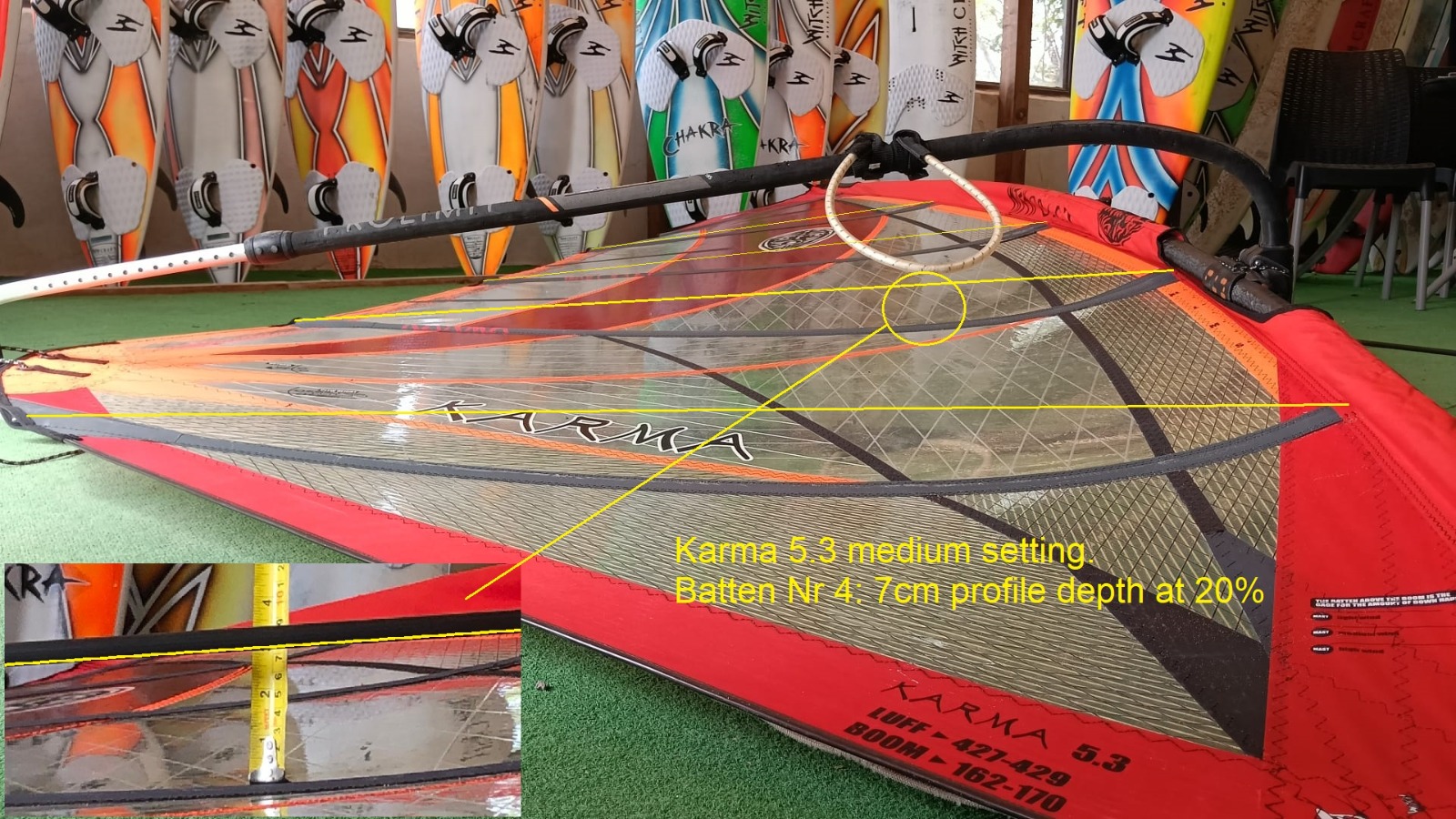
TRUTH ABOUT PROFILES: Why built in Pre-shape win
While much of the mainstream industry relies on heavy downhaul tension, high skin pressure, and batten rotation to bend flatter sails into shape under wind load, a hybrid approach using both built-in seam shaping (broad seaming) combined with a small amount of batten rotation, offers 6 distinct physical advantages:

- Instant Aerodynamic Lift: Like a curved airplane wing, a pre-shaped profile creates immediate lift the moment wind passes over it, without waiting for wind pressure to form the rig.
- Effortless Low-End Power: You don’t waste precious wind energy trying to force stiff battens into a baggy profile.
- Draft Stability Under Load: Under heavy gusts, batten rotation dependent sails tend to shift their draft backward. Built-in pre-shape locks the maximum draft forward (around 18-25% static, shifting to an ideal 30–35% under load), keeping control effortless.
- Smoother Batten Rotation: Since batten tips don’t need to poke aggressively past the mast to create shape, the sail rotates smoothly from tack to tack.
- Forgiving Angle of Attack: A more curved leading edge makes power delivery smooth and progressive rather than sensitive.
- Lower Leverage & Weight: Because a pre-shaped sail generates more lift per square meter, you can ride a smaller sail size with a shorter boom—improving handling and reducing leverage and fatigue on your body.
CHOOSING YOUR FIN SETUP: PROFILE THICKNESS & TWIST
The hydrodynamic principle of fins is the same as with sails. However, unlike sails, fin profiles are fixed. Mainstream trends often push thinner profiles for raw top speed. However, like with sails, for real-world wave and freeride conditions, profile thickness is a strategic choice:
Thick, Forward-Oriented Profiles (The Witchcraft Way):
Why: They handle large angles of attack without stalling, providing instant low-speed lift and dependable grip in tight, hard turns.
The Trade-off: At cruising and wave-riding speeds, a smaller, thicker fin creates similar drag than a larger, thin fin—but gives you more control, maneuverability and predictability in Gears 1, 2, 3, and big wave scenarios.

Thinner, Centered Profiles:
Why: Optimized for high-speed sailing (Gear 5). They require higher board speed before you can fully load them with foot pressure without spinning out.
Swept-Back (Raked) vs. Straight Fins:
Raked fins allow the tip to twist under pressure, automatically adapting high angles of attack for a forgiving, smooth turn. Just like a twisting sail can release excess pressure.
Upright fins offer a little better upwind efficiency, but can spin out suddenly when pushed past their limit.
SPECIAL APPLICATION: FLOAT AND RIDE WAVE SAILING
Float-and-ride conditions (light side to side off shore surface wind with big waves) present a unique dilemma: you need Gear 1–3 power to slog out through lulls, but Gear 4–5 neutrality to stay agile on the wave face.
How the Slayer Bridges the Gap
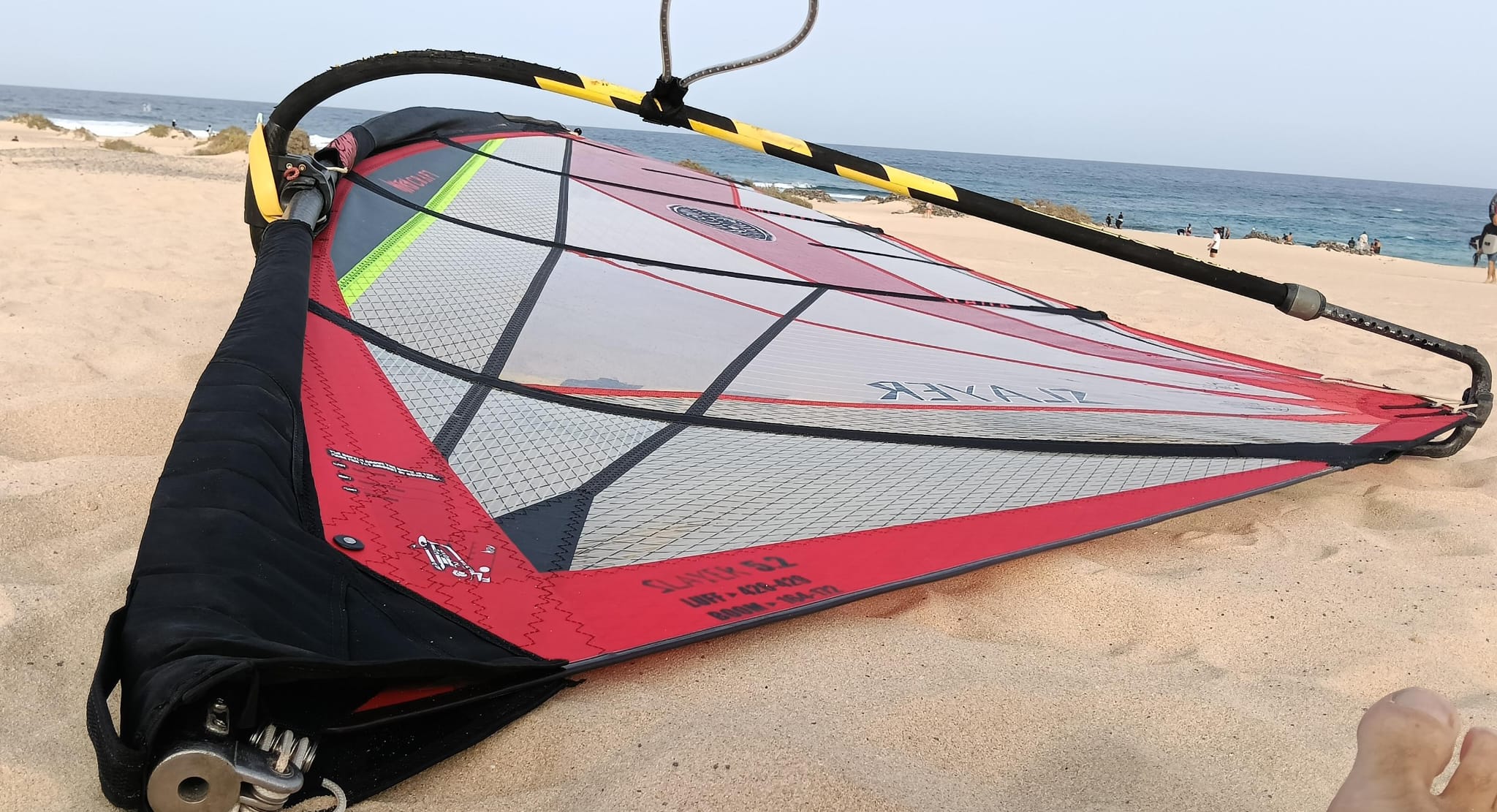
Flat-cut sails can feel neutral on a wave, but they struggle to get you out through the impact zone in light wind. The Witchcraft Slayer solves this with Dynamic Pre-Shape:
Slogging Out: A flexible Dacron luff panel combined with a 4-batten layout allows wind pressure to instantly expand the profile, giving you early planing power. This more flexible profile does cost a bit of wind range compared to the more stable Karma.
On the Wave Face: The moment you sheet out down the line, the elastic Dacron panel releases its tension. The battens naturally turn back to their neutral, flat state, returning the sail to a drag-free profile.
Paired with a board like the Witchcraft Wave V5/V6 (engineered with extra volume in a narrower outline for slogging without losing rail control), or a custom Flex Tail this setup lets you downsize your sail, saving physical energy and surviving the impact zone much easier. The special shape with inverted V, progressive rails, pre-twist fins and parabolic rockerline, gives the best drive on the wave. People have said that it feels like you accelerate through the turn.




FINDING YOUR COMFORT ZONE: WINDSURFING FOR LIFE
In recent years, many windsurfers added wingfoiling to their quiver or switched completely, often for logical reasons: it handles light winds effortlessly and cruises in a relaxed, low-impact speed bracket (15–20 knots) without beating up your joints in heavy chop.
Meanwhile, traditional windsurf marketing kept pushing the “higher, faster, harder” extreme of Gears 4 and 5, leaving a massive gap for anyone looking for efficient, low-effort sessions in marginal conditions.
The reality is: Light-wind efficiency and high comfort are not exclusive to for instance foiling. It is as well a matter of the setup of your equipment.
By intentionally setting up your gear for Gears 2 and 3, combining early-planing hulls, high-lift fin profiles, and pre-shaped sails that generate power without extreme downhaul, you drastically lower the required wind threshold and physical strain, you get early planing, easy handling in chop, and maximum time on the water.
Whether you foil or sail, understanding how to tune your windsurf equipment for these lower gears gives you complete control over how hard you work on the water and keeps windsurfing a top-tier option for any wind conditions.

Take our experience as a foundation and make it your own. You are welcome to test our equipment for yourself at our Test Centre on Fuerteventura, or get free advice from Bouke and book a session to test it out at TWS on Tenerife.
Author: Bouke Becker